

Lot n° 280
Estimation :
6000 - 8000
EUR
Result without fees
Result
: 7 700EUR
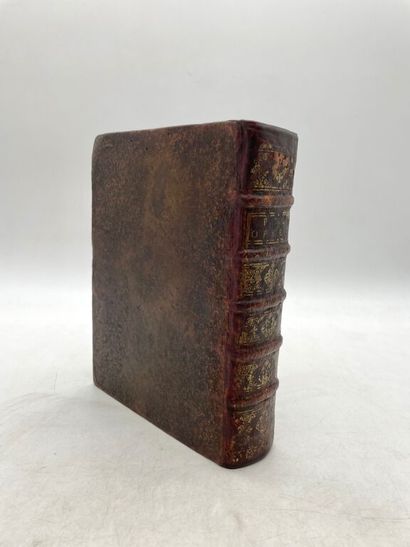
SPINOZA (Baruch). Opera Posthuma [including Ethics]. - Lot 280
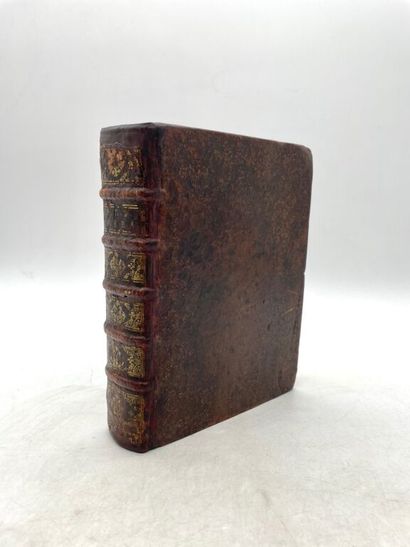
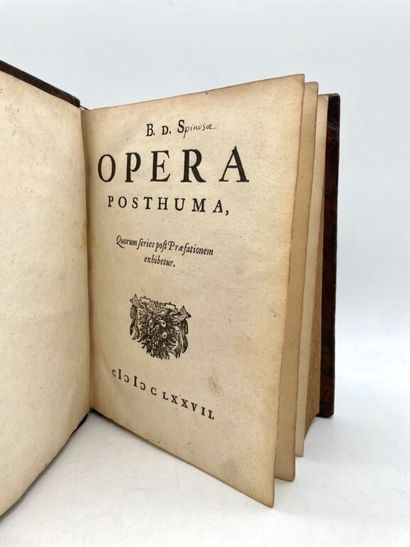
SPINOZA (Baruch). Opera Posthuma [including Ethics].
One of the most important collections of modern Western philosophy.
[Amsterdam], [J. Rieuwertz], 1677.
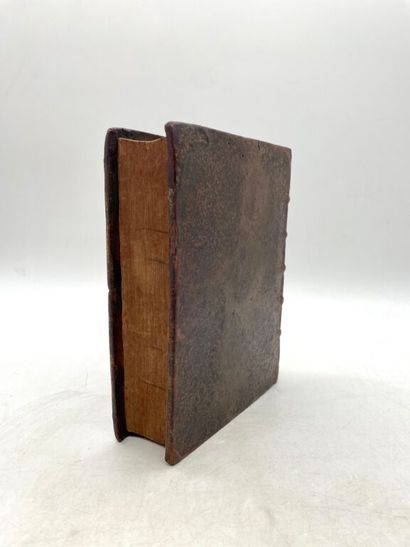
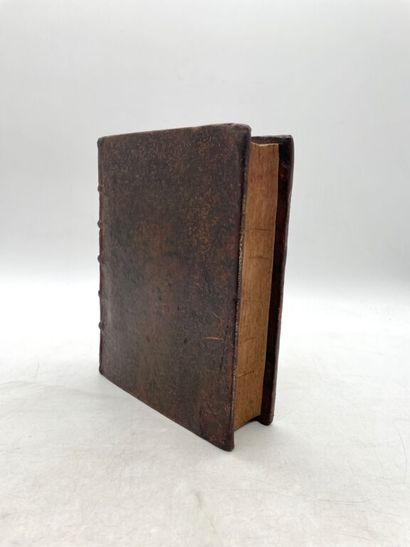
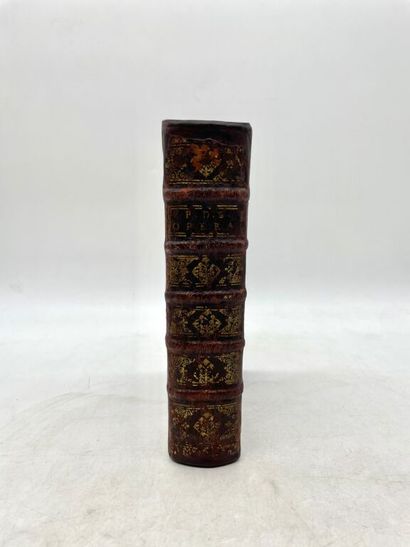
In-4 (220x170mm), full brown calf, spine with 5 nerves, decorated with small gilt irons and fleurons (period binding).
2ff. - 18ff. preface - 1f. - 614pp. - 16ff. table - 1f. - 112pp. - 4ff. index - 1f. ; some woodcuts in the text.
Very good restoration to corners, spines and headpieces, tiny wormhole under central nerve, headband renewed, leather cracked, some foxing but fresh inside.
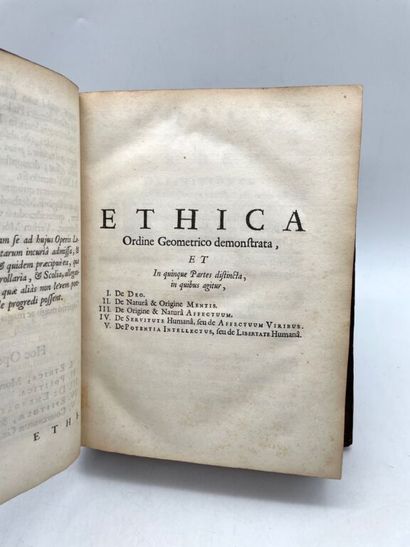
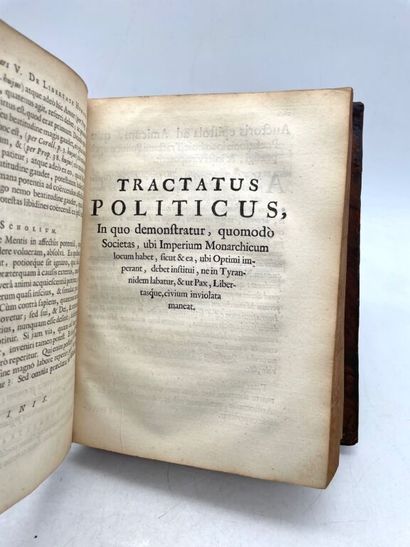
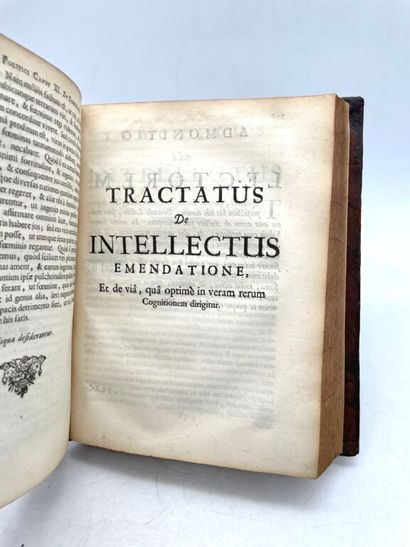
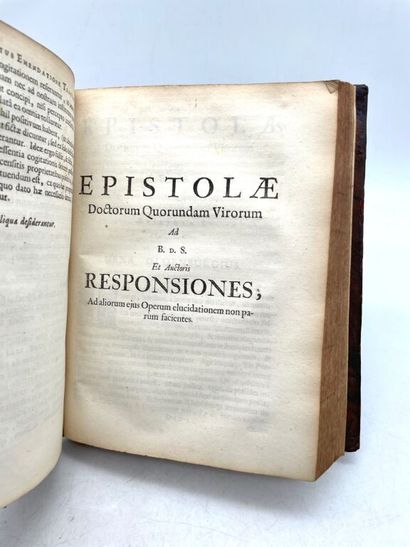
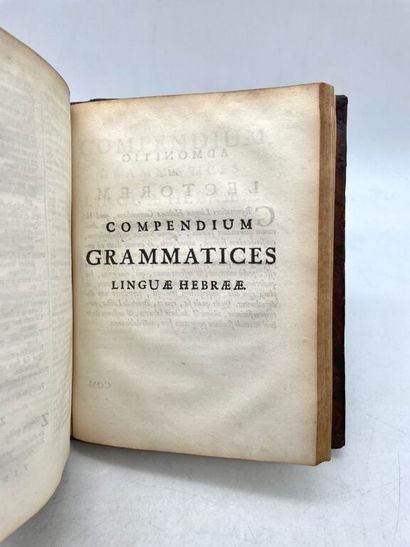
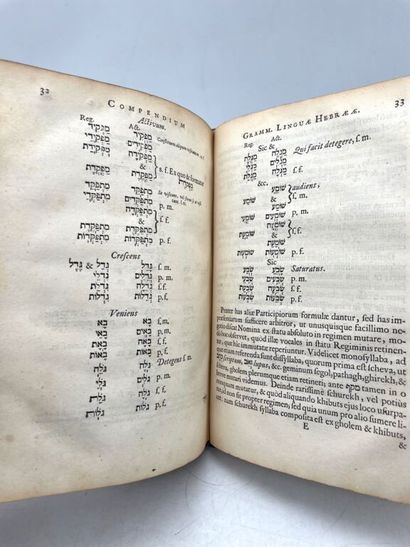
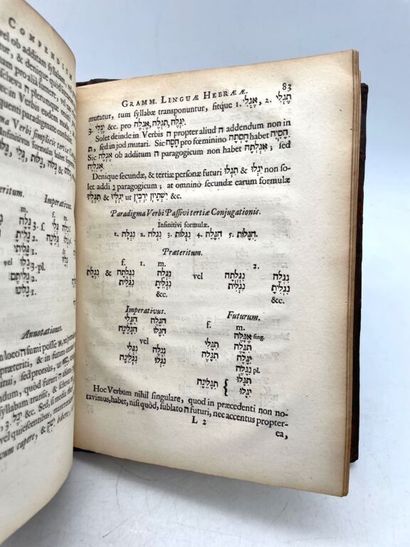
This posthumous first edition, printed in the year of the philosopher's death, contains 5 of Spinoza's most important works, published for the first time and organized as follows: I. Ethica (Ethics) / II. Politica (Politics) / III. De Emendatione Intellectûs (Treatise on the Reform of the Intellect) / IV. Epistolæ, & ad eas Responsiones (Letters and Replies) / V. Compendium Grammatices Linguæ Hebrææ (Precise grammar of the Hebrew language).
- The Ethics, which opens the volume after an extensive preface, was written in Latin between 1661 and 1675. It is published here in its original edition. It is divided into 5 chapters: I. De Deo (On God) / II. De Naturâ & Origine Mentis (On the nature and origin of the mind) / III. De Origine & Naturâ Affectuum (On the nature and origin of the passions) / IV. De Servitute Humanâ, seu de Affectuum Viribus (On the slavery of man or the strength of the Passions) / V. De Potentia Intellectus, seu de Libertate Humanâ (On the Power of Understanding, or the Freedom of Man).
There are a few figures printed in the text, illustrating processes through simple geometric figures.
- This is followed by the "Tractatus Politicus", in which Spinoza expounds his theory of natural law and the social contract. It is subtitled - in Latin - "in which it is explained how a society, whether monarchical or aristocratic, should be organized, so that it does not degenerate into tyranny and the peace and liberty of the citizens experience no harm." He also develops precepts on how best to organize a state according to three regimes: monarchical, aristocratic or democratic. The work is not completed, and is interrupted by the description of the democratic regime.
- This is followed by the "Tractatus de Intellectus Emendatione", written - unfinished - between 1665 and 1670. It is important for anyone wishing to understand the evolution of Spinoza's thinking on intelligence, perception, experience and memory, as well as the foundations of his theory of knowledge. From the outset, Spinoza sets out what is the credo of all his philosophical works: he wants to differentiate between true and false goods, goals such as wisdom that bring us real satisfaction from those that bring us only ephemeral and illusory joy, such as the pursuit of wealth, reputation and pleasure. Ethics itself is simply an extension of this project.
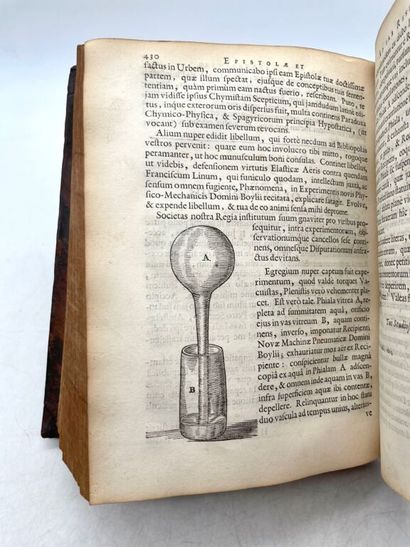
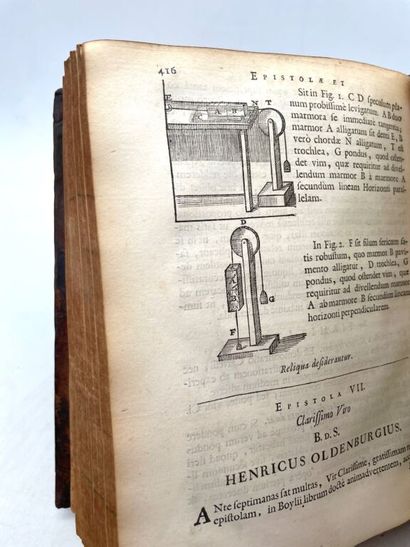
- The "Epistolæ Doctorum Quorundam Virorum ad B. d. S. et Auctoris Responsiones, Ad aliorum ejus Operum elucidationem non parium facientes", i.e. "Letters from certain Doctors to Spinoza and replies from the author, offering unequal illumination on his other works". There are 74 of them, some illustrated with woodcut figures in the text.
- The "Compendium Grammatices Linguæ Hebrææ", which closes the collection, is little known. It deals mainly with the phonology and morphology, particularly verbal, of Biblical Hebrew. The part on syntax, announced by Spinoza, is lost. Largely inspired by the work of earlier grammarians, including Johannes Buxtorf, this text above all reveals Spinoza's unfamiliarity with the medieval Jewish grammatical tradition and the Hebrew of the rabbis. Long neglected by Spinozist critics due to its arduous and technical nature, this text is now inseparable from the rest of Spinoza's work, and helps to understand the philosopher's relationship with the Scriptures and their language, one of the central subjects in the rest of his work, and in particular in the Theological-Political Treatise.
Although posthumous, this edition is probably the most important of all the philosopher's works in our possession. It was printed anonymously, with the initials B. d. S. for "Benedictus de Spinoza".
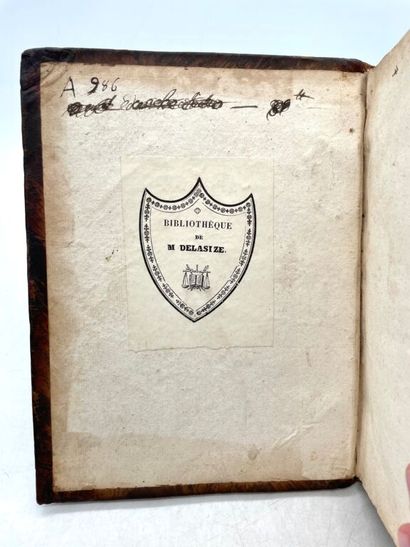
Provenance:
- Pierre-Charles Delasize (ex-libris "Bibliothèque de M. Delasize); judge at the court of Rouen. His extensive library was sold in 1846.
My orders
Sale information
Sales conditions
Return to catalogue