

Lot n° 238
Estimation :
600 - 700
EUR
[OPPENHEIMER]. Merckwürdige Staats: Merckwürdige Staats: A G - Lot 238
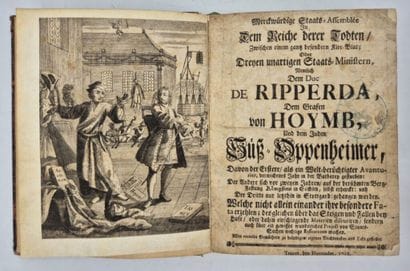
[OPPENHEIMER]. Merckwürdige Staats: Merckwürdige Staats: A Gathering in the Realm of the Dead, Between a Very Special Clover Leaf; Or Three Unruly Ministers of State, Namely: The Duke of Ripperda, the Count von Hoymb, and the Jew Süß-Oppenheimer.
Rare first edition, one of the earliest printed accounts of the construction of the legend of “Süß the Jew,” which would go on to have a tragic legacy in literature and subsequent propaganda.
Tetuan [Regensburg], by Hunniades [Bader], 1738.
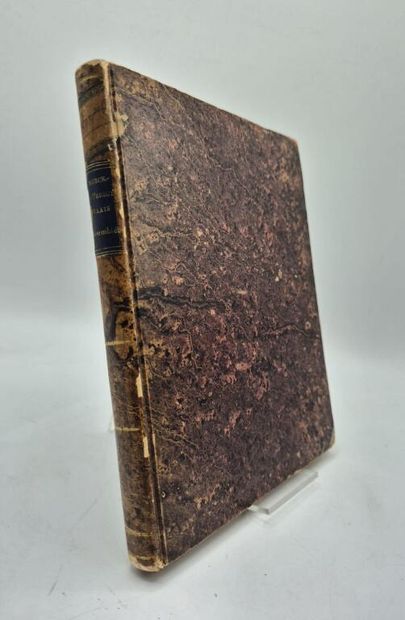
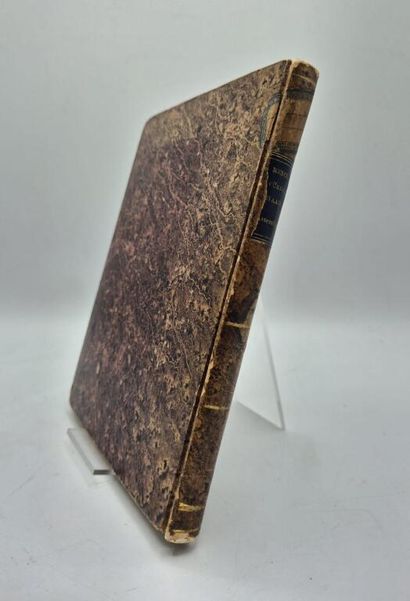
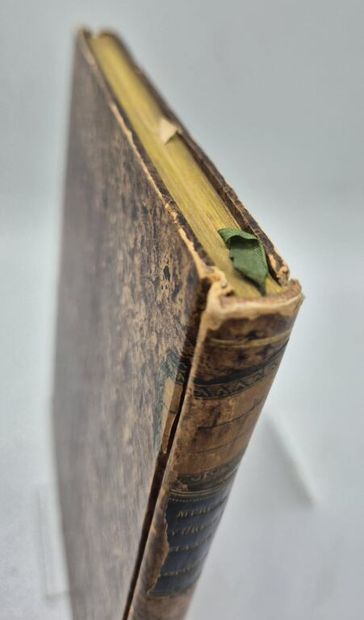
In-8, brown marbled paper Bradel binding, smooth spine with blue leather title label and gilt fillets, yellow edges.
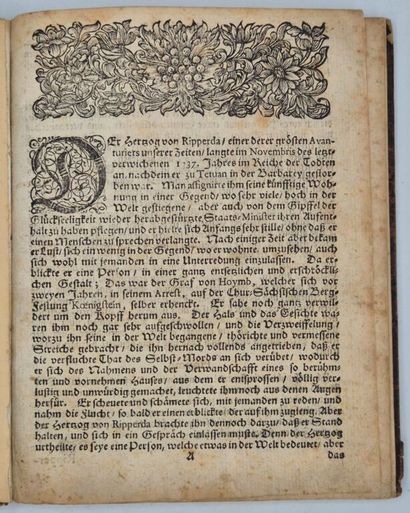
2 ff. n.ch. (frontispiece, title page) and 192 pp., headbands, initials, and page-head ornamentation.
In German.
Binding rubbed, spine slightly sun-faded with a small loss to the title label, a schoolboy’s label glued to the top of the spine, some repairs (frontispiece reattached, corners of the title page and the last two leaves), some water stains and more pronounced foxing on the last four leaves, illegible ink stamp on the title page.
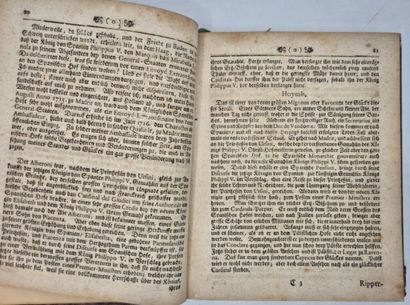
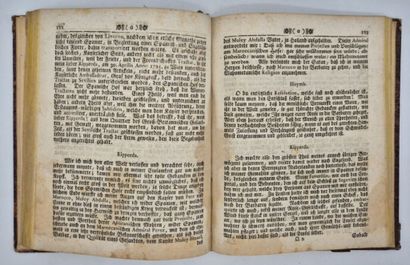
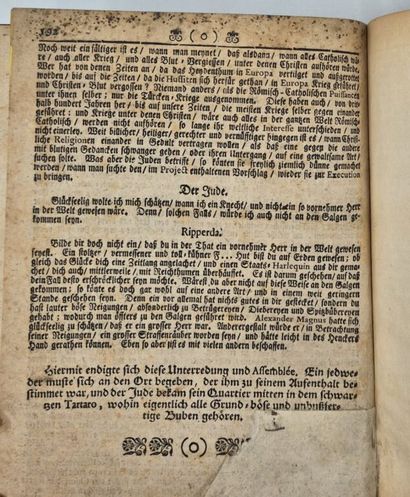
Anonymous first edition of this political satire in the form of a dialogue among the dead, a genre quite popular in the 18th century. It is attributed to David Fassmann (1685–1744), a German journalist who was a master of this pamphleteering genre.
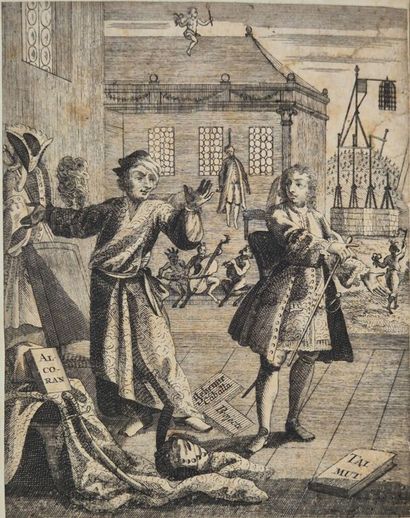
The frontispiece features a woodcut depicting Joseph Süss Oppenheimer (1698–1738) suspended in a cage mounted on an imposing scaffold. In the foreground are the Duke of Ripperda (1684–1737) and Count von Hoym (1694–1736). At their feet lie volumes titled “Alcoran,” “Talmut,” and “Caballa.”
The author portrays the figures in this dialogue as “unworthy ministers,” accused of ambition, corruption, manipulation, and abuse of power. The Duke of Ripperda is described as a political adventurer who has deceived several European courts. Count von Hoym appears as a victim of the intrigues of the Saxon court. Joseph Süss Oppenheimer, who was executed a few months before the book’s publication, is portrayed as a powerful financier. A court advisor to the Duke of Württemberg, he was found guilty of abuse of power by German society after the death of his patron. Unlike the other two figures featured, the author does not refer to him by his last name but rather by the derogatory term “Der Jude.” Anti-Semitic circles seized upon Oppenheimer to turn him into the embodiment of the deceitful Jew. His character, who became the infamous “Jew Süss,” has been the subject of numerous works, including the 1940 film adaptation, which served as anti-Semitic propaganda for the Third Reich.
A copy in good condition.
My orders
Sale information
Sales conditions
Return to catalogue